
Useful internal workflows
Simple flows around the tasks people already do, with less friction and less repetitive work.
AI workflows
Mosel helps companies explore practical AI workflows, smaller automations and useful internal systems that reduce repetitive work without turning everything into a big AI project.
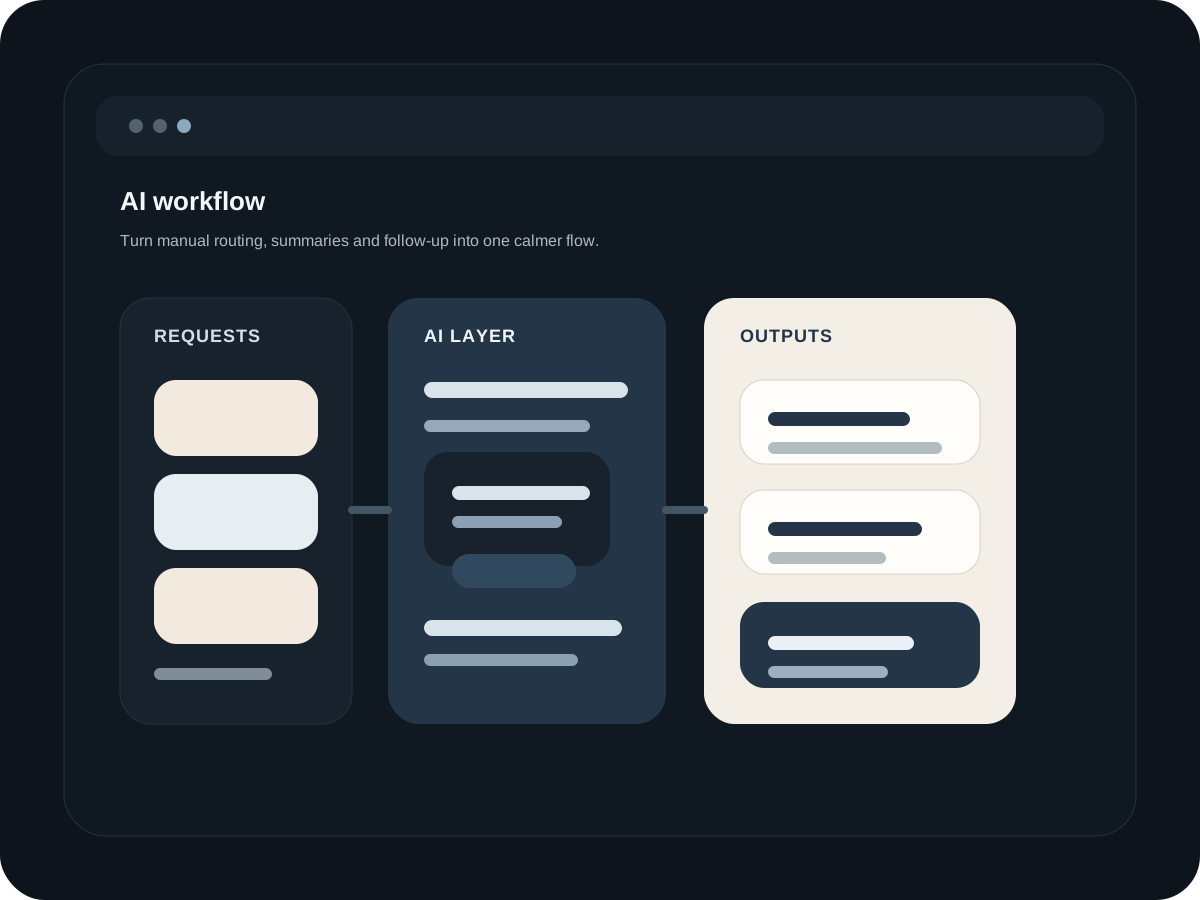
There are repetitive tasks inside the company that clearly should take less manual time.
You want to test AI in a practical way, not as a vague innovation project.
The team needs a simpler workflow around content, support, follow-up or internal operations.
You want help deciding what is actually worth automating and what should stay manual.
What it can include
Simple flows around the tasks people already do, with less friction and less repetitive work.
Tooling that helps with drafting, sorting, reviewing or moving work forward in a controlled way.
Small systems, notifications or handoffs that save time without creating a fragile setup.
The point is not to force AI into everything. The point is to find the few places where it helps for real.
How we approach it
We start with the workflow, not the tool. The best use cases are usually the ones causing the most repeated friction.
Often the right first step is a narrow tool, a lightweight automation or a clearer internal flow.
Once something proves useful, it can be refined and integrated more properly over time.
Focused assistant examples
This is usually the right level to sell first: one assistant for one recurring workflow, with a clear owner, a clear boundary and a clear reason it should exist.
A calmer first layer for customer requests, intake, routing and draft replies when the inbox gets too manual.
Open page
Lead qualification, note-making and first-draft follow-up for teams that are losing time between inquiry and next step.
Open page
Tasks, documents, setup reminders and repeated internal guidance for teams that want onboarding to feel less improvised.
Open pageGood fit
This is usually a good fit when the team has obvious repeated tasks, too much manual follow-up or a workflow that is clearly heavier than it needs to be.
The best outcomes are often small at first: a narrow tool, a useful automation or a clearer internal flow that saves time every week.
One example is reducing repetitive admin work around inboxes, follow-up and internal handoffs.
Usually starts with one focused pilot, then a monthly follow-up only when the workflow proves useful enough to keep improving.